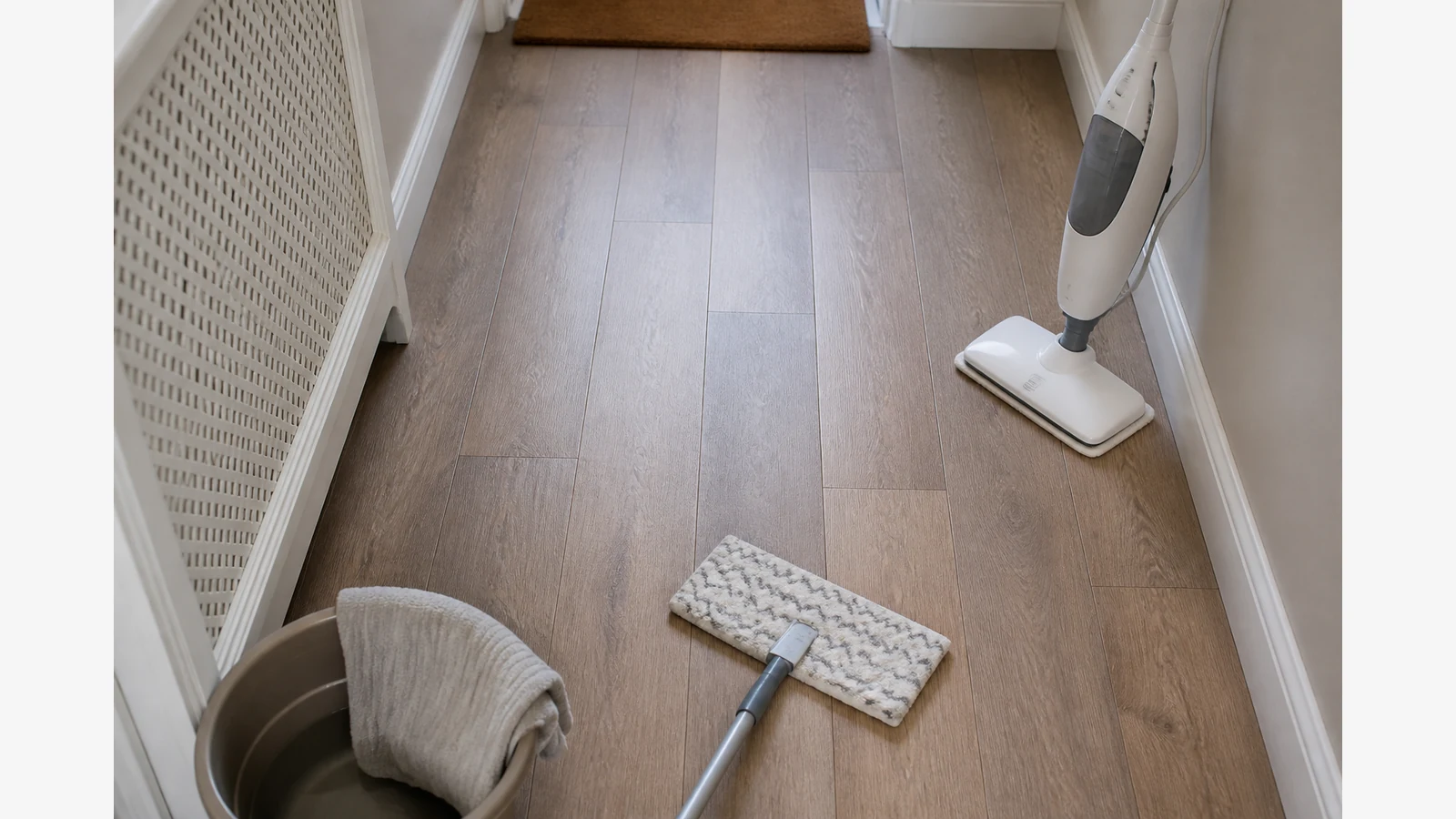
Steam Cleaner On Laminate Floors Uk
Many UK laminate makers advise against steam cleaning: heat and moisture can swell the fibreboard core and lift boards. Treat mop marketing that lists “laminate” as a claim to verify against your floor’s own care sheet — not as warranty cover.
Which? (updated 2025) warns that laminate makers generally advise against steam because heat and moisture can swell fibreboard layers. UK flooring retailer Factory Direct Flooring similarly says steam cleaners are unsuitable for laminate because humidity can lift boards.
Why shop floors and warranties disagree
Steam mop packaging often shows glossy kitchen floors and casually names laminate. Flooring warranties and care leaflets are stricter: if steam is forbidden, using it can void cover even when a mop brand says “suitable”. Always prefer the floor manufacturer’s written advice.
Buyer checklist before you steam
- Read the floor care sheet or installer warranty for explicit steam wording.
- If steam is banned or unclear, use the lowest-moisture method the maker allows (often a lightly damp microfibre mop).
- If you still consider steam on a different hard surface the maker allows, test a tiny inconspicuous area first and dry promptly.
- Never flood edges, expansion gaps or poorly sealed joins.
Surfaces that usually need extra caution
- Unsealed or waxed wood
- Bamboo flooring
- Water-based painted finishes
- Delicate fabrics and some soft furnishings
For format choice when floors are only part of the job list, compare tools in steam mop vs steam cleaner. Kitchen grease and oven jobs belong on steam-safe hard surfaces — see kitchen grease steam routine.
Safer use of a multi-surface handheld
If laminate is off-limits, keep steam for steam-safe hard surfaces and detail jobs (tiles where allowed, cooled hobs, bathroom fittings) and clean laminate with the maker’s approved method. When you want a handheld for those non-laminate jobs, check the Steamio multi-surface handheld page.